
IFTA for new trucking authorities: What every Texas carrier must know in their first quarter
Starting your own trucking authority is an exciting milestone, but your first quarter can quickly become overwhelming if you’re not prepared for IFTA requirements.
In our experience, we’ve seen many carriers focus on how to get a trucking authority in Texas, securing their Texas DOT number, and activating their MC number, but overlook one of the most important ongoing compliance requirements: IFTA fuel tax reporting.
If you’re operating under a new trucking authority, this guide explains exactly what you need to know about IFTA in your first quarter and how to avoid costly penalties.
At Texas Truck Permits, we help Texas carriers stay compliant from day one.
What Is IFTA (International Fuel Tax Agreement)?
The International Fuel Tax Agreement (IFTA) is a cooperative agreement between U.S. states and Canadian provinces that simplifies fuel tax reporting for interstate carriers.
Instead of filing fuel taxes in every state you drive through, IFTA allows you to:
- File one quarterly fuel tax report
- Report total miles driven in each state
- Pay or receive fuel tax adjustments through your base state (Texas)
If you operate a qualified commercial vehicle across state lines, IFTA compliance is mandatory for your trucking authority.
Who Needs IFTA in Texas?
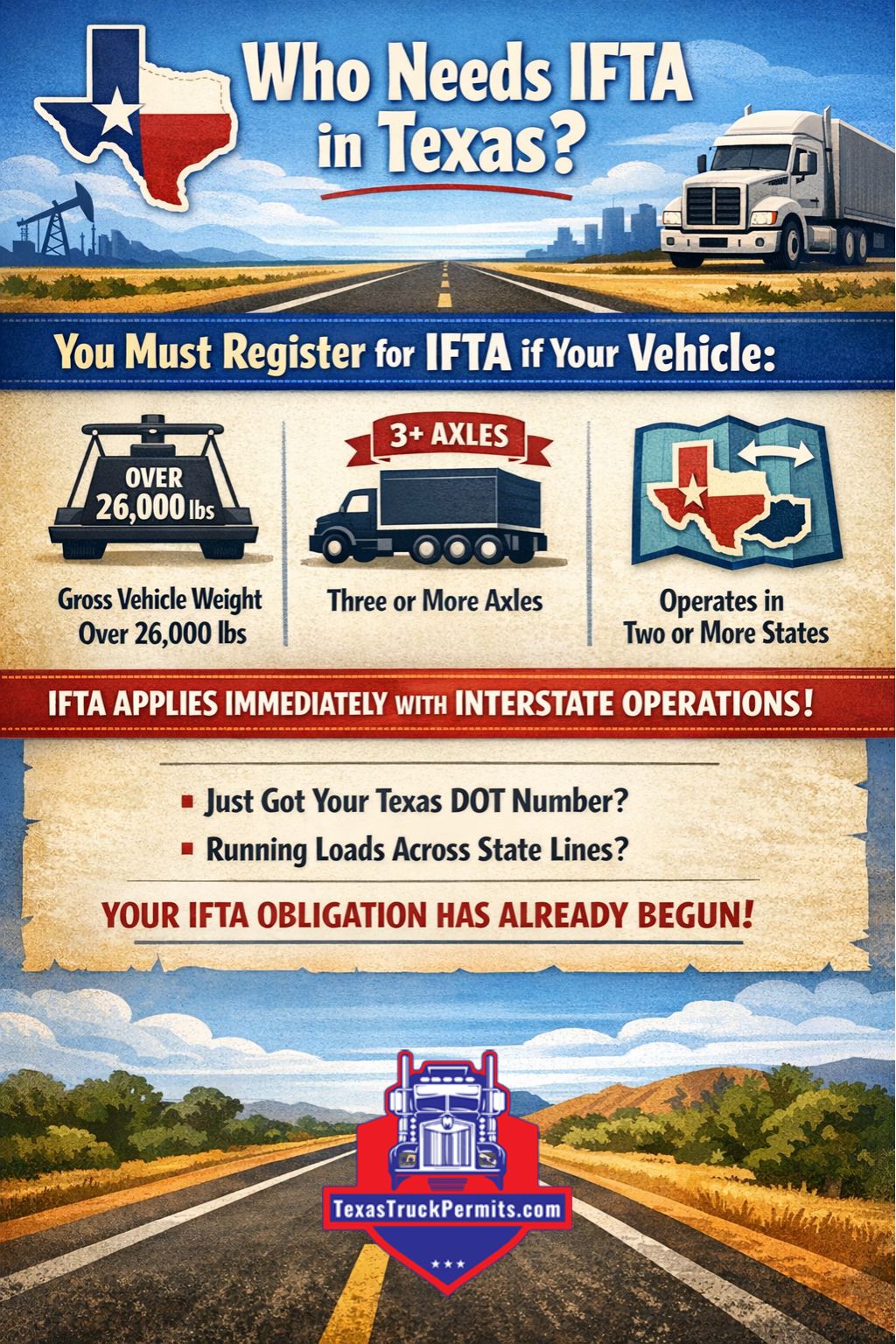
You are required to register for IFTA if your vehicle:
- Has a gross vehicle weight over 26,000 lbs
- Has three or more axles regardless of weight
- Operates in two or more states
Many of our clients don’t realize IFTA applies immediately once interstate operations begin.
Carriers that has recently completed their Texas USDOT number registration often don’t realize that their IFTA requirements begins as soon as interstate operations start.
Why your first IFTA quarter is so important
Your first IFTA quarter sets the tone for your entire compliance history.
Carriers operating under a new trucking authority are more likely to face audits if early filings show inconsistencies, missing miles, or fuel reporting errors.
Common first-quarter problems include:
- Missing trip records
- Incomplete fuel receipts
- Late filings
- Misunderstanding taxable vs. non-taxable miles
- Failing to file when no miles were run
These early mistakes can trigger penalties that put your MC number and overall trucking compliance status at risk.
What records you must keep for IFTA
IFTA is documentation-driven. During your first quarter, accurate records are critical.
Mileage Records Required for IFTA:
- Total miles traveled
- Miles driven in each state
- Beginning and ending odometer readings
- Trip dates and routes
Fuel Records Required for IFTA:
- Date of purchase
- City and state
- Number of gallons purchased
- Fuel type
- Seller’s name
If you are ever audited, estimates are not accepted. Poor documentation can lead to heavy assessments and penalties.
IFTA Filing Deadlines (Texas Carriers)
IFTA returns are filed quarterly, even if you did not operate during that period.
- 1st Quarter (Jan–Mar): Due April 30
- 2nd Quarter (Apr–Jun): Due July 31
- 3rd Quarter (Jul–Sep): Due October 31
- 4th Quarter (Oct–Dec): Due January 31
Missing your first filing deadline can result in:
❌ Penalties and interest
❌ Suspension of your IFTA license
❌ Holds on your registration
❌ Risk to your trucking authority Texas status
Common IFTA Mistakes New Texas Carriers Make
Owner-operators who just completed the process of getting their trucking authority often assume compliance ends after they receive their authority.
Here are the most common first-quarter mistakes:
- Assuming dispatch or ELD systems calculate everything correctly
- Mixing personal and business fuel receipts
- Not reconciling miles vs. fuel purchases
- Waiting until the last week to prepare reports
- Forgetting to file a zero report
IFTA is one of the first recurring compliance requirements after establishing your trucking business and one of the easiest to mishandle without proper systems.
How IFTA connects to overall trucking compliance
IFTA is not separate from compliance; it is part of your full regulatory profile.
During audits, IFTA may be reviewed alongside:
- FMCSA safety audits
- Operating authority status
- IRP registration
- UCR filings
- MCS-150 updates
If you’re serious about protecting your trucking authority, consistent IFTA compliance is non-negotiable.
Need to know more about IFTA? Checkout our recent article on everything you need to know about IFTA.
Should New Trucking Authorities Outsource IFTA?
All of the owner-operators we’ve helped quickly realize compliance takes time away from operations.
Outsourcing IFTA reporting can:
✔ Reduce costly reporting errors
✔ Ensure on-time quarterly filings
✔ Prevent penalties and interest
✔ Keep audit-ready documentation organized
✔ Free you up to focus on loads and revenue
For new authorities, the first quarter is when professional support makes the biggest difference.
How Texas Truck Permits can help with IFTA compliance
At Texas Truck Permits, we help carriers from startup through long-term compliance management.
Whether you’re
- Learning how to get a trucking authority
- Operating under a new trucking authority
- Managing an active MC number
- Protecting your Texas DOT number
We provide complete IFTA support, including:
- IFTA registration & setup
- Quarterly IFTA fuel tax reporting
- Mileage and fuel reconciliation
- Deadline reminders
- Audit-ready record organization
We help you maintain full trucking compliance so your authority stays active and protected.
Final Thoughts: Protect Your Authority From Day One
Your first IFTA quarter is one of the most important compliance milestones in your trucking business. Preparing early and reporting your fuel taxes accurately can save you from penalties and keep your operations running smoothly.
Proper preparation and accurate reporting protect:
✔ Your MC authority
✔ Your trucking compliance record
✔ Your cash flow
✔ Your long-term growth
If you’re operating under a new authority or preparing for your first IFTA filing, working with professionals who understand trucking regulations can make the process much easier. Many carriers rely on trucking permit and compliance services to manage registrations, IFTA reporting, and other regulatory requirements while staying focused on running their business.
If you need assistance with IFTA filings or trucking authority services in Texas, the team at Texas Truck Permits can guide you through every step. You can also contact us to get expert help and stay ahead of every compliance deadline.
FAQ
- What is IFTA in trucking?
IFTA is an agreement that simplifies fuel tax reporting for interstate trucking companies by allowing carriers to file one quarterly report through their base state. - When do new trucking authorities need IFTA?
New trucking authorities must register for IFTA once they begin interstate operations with qualified commercial vehicles. - What happens if you miss an IFTA deadline?
Missing an IFTA filing deadline can result in penalties, interest, license suspension, and compliance issues for your trucking authority.






Leave A Comment